Home / Articles

Blog - Articles

Backyard Treasure Hunt with Picture Clues

It’s scavenger hunt week here at Inspiration Laboratories. We’ve been having so much fun. We’ve shared hunts to do inside, toddler hunts, preschool hunts, hunts that the neighbor kids will love, and now we’re sharing one that’s perfect for the backyard. Print out the picture clues, invite some friends, and head outside.

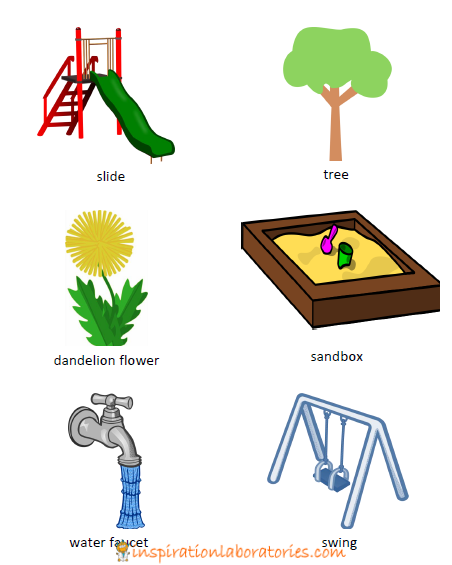
This treasure hunt is so easy to set up. Seriously, just print out the backyard treasure hunt picture clues and laminate them with contact paper. I’ve made 18 clues for you. Select the ones that work for your backyard. Make the hunt as long or as short as you like. Maybe start with just 5 clues for younger kids. With older kids, see if you can use them all.

picture clues


I love that this treasure hunt works in a variety of yard sizes. We played in our own small backyard. We also took the clues to a play date at our friends’ bigger backyard.

Plan out your hunt with one clue leading to the next.

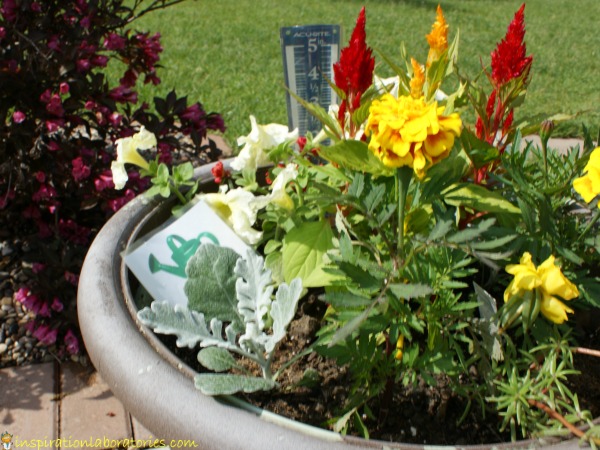
clue in plant

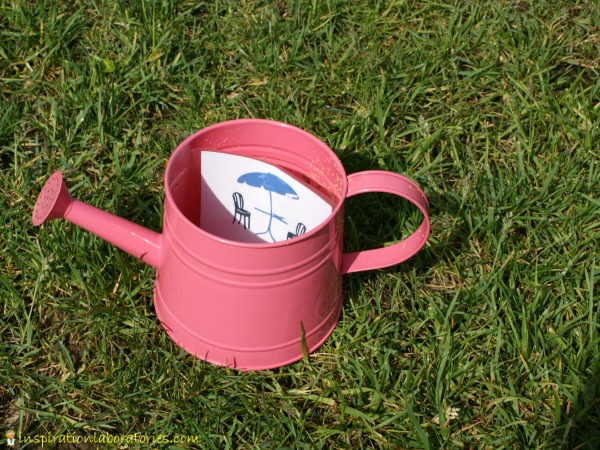
Head to the watering can next.

clue in watering can

Keep working your way through the clues.

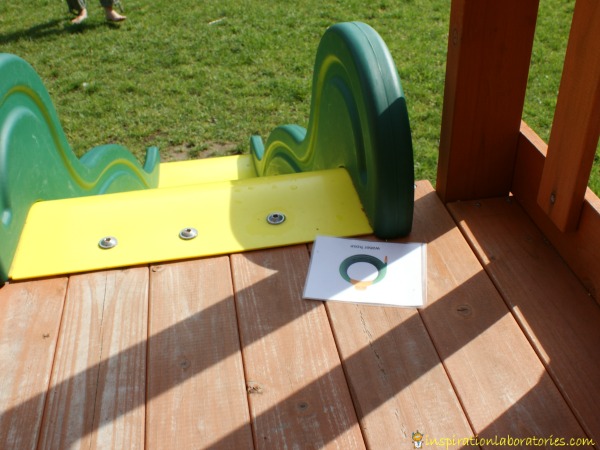
clue on slide

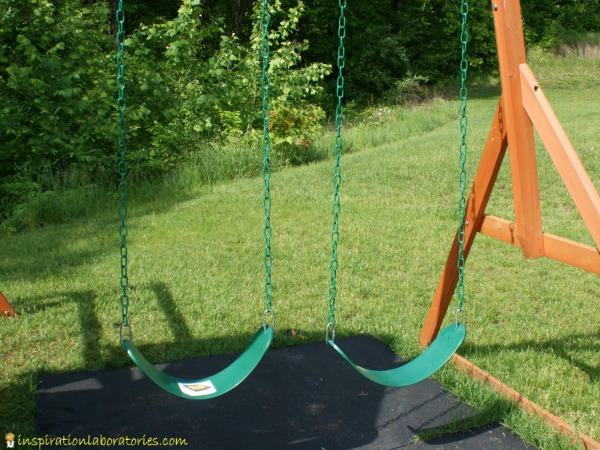
Some clues might be really easy to find (like the clue on the swing). Others might be more difficult. How many trees are in your backyard? How much grass? You’ll have to look in several places to find the next clue.

clue on swing

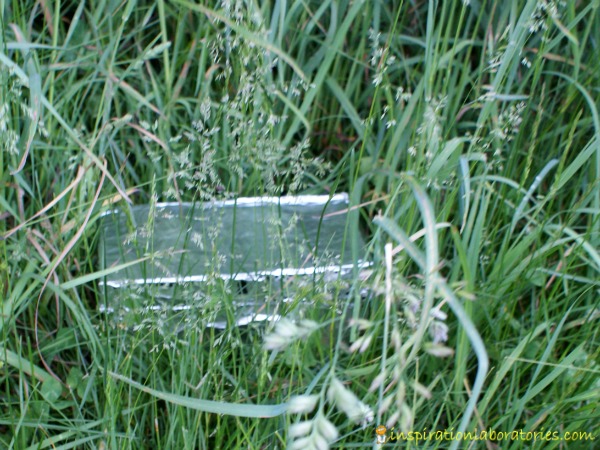
Eventually, you’ll end your hunt at the treasure.

treasure in grass

Once your kids get the hang of the treasure hunts, they can create them for each other. Place the pictures in a different order or use different clues. It’s fun to play this again and again!


source: inspirationlaboratories

The Four Goals of Misbehavior Series: Part One

The Four Goals of Misbehavior Series: Part One

When is the last time your child’s behavior completely baffled you? What causes children to misbehave when, in your view, they clearly should know better? It can be hard to understand what is motivating your child to behave, but understanding what drives behavior is a key component of positive parenting. When we seek to understand that is motivating our children, we are better able to address the cause of the behavior rather than reacting to the behavior itself. That is where real change takes place – at the root. If we don’t address it there, it will just keep cropping up again and again.

I recently discovered the work of Dr. Rudolf Dreikurs. He was a psychiatrist who founded and was the medical director of the Community Child Guidance Center in Chicago. Dreikurs was influenced by social psychologist Alfred Adler who believed that the central motivation of all humans is to belong and be accepted by others. He believed that all behavior was purposeful and directed toward achieving social approval. Dreikurs suggested that all misbehavior is eh result of a child’s mistaken assumption about how to find a place and gain status. He did not believe in using punishment, rewards, or praise to change behavior, but rather that natural consequences and encouragement were the most useful techniques for preventing misbehavior.

Following is an overview of the first two of Dreikurs’ four goals of misbehavior along with my own suggestions on how to deal with each one.

Goal one: Attention

One of the common motivators of misbehavior, according to Dreikurs, is to get attention. This is driven by the belief that they do not matter (belong) unless they are being noticed or served. Children who are seeking attention with negative behaviors feel insignificant. Parents are often told to ignore children when they appear to be seeking attention because it is a popular opinion that giving children the attention they seek will reward or reinforce negative behaviors. Relating to this advice, Dr. Gordon Neufeld of the Neufeld Institute says this: “What else is there to want? And if we see a child who wants attention, why wouldn’t we give it to them? Why wouldn’t we meet these basic needs of affection, attention, of mattering and significance?”

From a Positive Parenting standpoint, behavior is always communication. When children seek attention in negative ways, this is a cry for help. By ignoring the child, we are ignoring their plea. When children are clingy and needy and we ignore this need, we are rejecting them. If children are seeking attention and attachment, they are in need of attention and attachment, so we can at least begin to understand their behavior and formulate a response from this place rather than from an idea that they are needlessly seeking attention and should be ignored. This doesn’t mean, of course, that you necessarily give in to demands or rearrange your plans. It simply means that you first seek to understand what is driving the behavior. When children are exhibiting troubling behavior that appears to be attention-seeking, you can set a limit on that behavior while still providing the attention and love needed by following the 3 steps to positive discipline discussed in full detail here.

Goal two: Power

It’s no wonder children feel so powerless. They have very little control in their lives, and of course they shouldn’t have too much power yet because they haven’t matured enough to make knowledgeable, wise decisions, but seeking control isn’t a bad thing. Think of the anxiety you feel when you don’t have control! Though the behaviors that children use to gain control are frustrating, we can take a step back and look at what is motivating them.

Our tendency is to feel that our authority is being threatened and anger is a common response to this threat, so our first reaction is often to posture ourselves for a fight. It’s a natural reaction when we feel threatened, so one of the things we practice in Positive Parenting is softening and responding. Children won’t hear us until they feel heard themselves, so when we try to shut down their feelings or their voices, they naturally push back, and we find ourselves locked in a power struggle that no one really wins. However, by meeting our child with empathy, we can reset the tone of the interaction. It may be something as simple as, “I hear you” or “I understand.” When spoken genuinely, empathy is a powerful diffuser of power struggles because it communicates “I understand you and I’m on your side.”

My advice is to offer a reasonable choice or alternative. Kids hear no a lot, and many of those no’s are necessary. However, it is very frustrating to be told no all the time and to have so little control over your own life. Is there an alternative you could offer that makes you both happy? Sometimes I think we are afraid that offering choices and negotiating are signs of weak parenting and we are afraid these actions compromise our authority, but I believe it shows kids that we respect them as individuals, and this inspires them to respect us more.

Another tip is to disengage without disconnecting. When disengaging from a power struggle, we are effectively ending the conversation with a “that’s final.” However, there are two ways to do this, one that disconnects and one that invites connection. As you might imagine, “Because I said so and that’s final! One more word about it and you’re grounded!” might be effective at ending the power struggle (or it might not!) but it leaves the relationship with your child on shaky ground. We can stick to our guns and say the same thing but in a way that isn’t so harsh. Instead, try saying “I love you too much to argue with you, so let’s not discuss this any further. If you need to take some time to cool off, you can. When you are ready, I’d love for you to come and find me.” This communicates I’m not willing to change my position but I still love you and I want you around, and those last two messages are vital to a strong connection and to a child’s self-worth.


written by Rebecca Eanes 

15 things you should never order at a restaurant, according to people who work in the industry

15 things you should never order at a restaurant, according to people who work in the industry

We surveyed dozens of people in the restaurant business on what they never, ever touch, whether it's to avoid outrageous markup, food poisoning, or germ minefields. Watch for these offenders.

Iceberg lettuce

Wedge Salad
Germs can hide inside lettuce’s cracks, corners, and edges. 
Ralph Daily / Flickr

The iceberg wedge salad is one of the industry’s biggest rip-offs. Take into account that iceberg lettuce is about 98% water, and it’s easy to see why. “It’s marked up at least 20 times,” says Peter Chastain, executive chef and owner of California’s Prima Ristorante. Plus, germs can hide inside lettuce’s cracks, corners, and edges. “You think lemons in water are dirty? The salads are filthy,” Cannon says. Even if restaurants do decide to wash their greens, the lettuce is often served soggy, which is big red flag—standing water mixed with lukewarm, mayo-based dressing is a disaster waiting to happen.

Best sellers

vegan burger
Best-selling items are often pre-made. 
Joshua Resnick/Shutterstock

You might think best-selling items have high turnover. But to keep up with demand, fast-food restaurants and some other places pre-make their top sellers, which gives these wrapped and bagged choices plenty of time to develop food-borne illnesses. Instead, opt for the less popular options which are more likely to be prepared to order, says Howard Cannon, CEO of Restaurant Expert Witness and author of "The Complete Idiot’s Guide to Starting A Restaurant," who adds, “Anything sitting in holding, covered with mayonnaise, is probably not that great.” Whatever, you do, don’t order these 8 dishes that are basically a heart attack on a plate.

Tap water

tap water
If you’re handed anything warmer than ice-cold, ask for a new glass. 
Cate Gillon/Getty Images

“One of the most dangerous items in a restaurant is water,” Cannon says, although anything that sits between 40 degrees to 140 degrees for more than a short time has a high potential to harbor bacteria. If your table is already set with a carafe of water, or you’re handed anything warmer than ice-cold, ask for a new glass.

Free bar snacks

Bar
Bar snacks are covered in germs. 
Flickr/riNux

Since these nuts, pretzels, and other munchies are free of charge, restaurants and bars often don’t set out a fresh serving for each new customer. It’s like eating out of a stranger’s hand! Then at closing time they’re dumped back into a container, to be re-poured into dishes the next day. Try these bar snacks that are actually good for your heart.

Meat with the bone in

pork chop
Bone-in means less meat. 
ilovebutter/Flickr

Small cuts of meat, like bone-in pork or chicken breasts, are harder to cook thoroughly because their outsides easily char. This often translates to crispy on the outside and raw on the inside. Unlike undercooked beef—say, a rare burger or a steak tartare—undercooked pork and chicken are highly dangerous and could causes food-borne illnesses, according to the Center for Disease Control and Prevention. Plus, bone-in means less meat.

Sauced-up specials

Chicken Marsala
Be wary of meat that’s been cut, braised, and disguised in a pasta, stew, or soup dish. 
smpics / iStock

To avoid running out of ingredients during the dinner rush, restaurants often order more food than they need. At the end of the day, surplus ingredients that haven’t expired can turn into tomorrow’s specials, disguised with sauce. “Watch out for an expensive item used in a way that’s minimizing its flavor,” says Stephen Zagor, founder of consulting firm Hospitality & Culinary Resources, in Wall Street Journal’s SmartMoney. Be wary of meat that’s been cut, braised, and disguised in a pasta, stew, or soup dish. Check out these 20 tricks to eating healthier when dining out.

DIY grilling

korean bbq
Leave the cooking to the chefs. 
George N/Flickr

Restaurants with a built-in-grill dining table sound like fun. But: “Braised food from a steam table is fraught with peril—sneezing customers, improper cooking,” says Chastain. One Korean BBQ joint in Las Vegas shut down after earning an astoundingly disgusting 53 demerits from the Southern Nevada Health District. Leave the cooking to the chefs.

Meatloaf

meatloaf
Order a burger or a steak. 
AS Food studio/Shutterstock

First, there’s often more filler than meat, but restaurants think if they drown the dish in enough sauce and seasoning, you won’t notice. To help sell it further, many menus use descriptive words like “homemade,” “home-cooked,” “home-style,” or worst of all, “Mom’s.” Don’t insult your mama! Order a burger or a steak.

"From-there" seafood

seafood
The seafood typically won't come from the location it's advertised. 
Flickr Creative Commons/y6y6y6

Unless the joint is known for its seafood, there’s no guarantee you’re going to get what’s on the menu. “About 70 percent of the time, for example, those Maryland crab cakes weren’t made using crabs from the Chesapeake Bay,” says James Anderson, chairman of the Department of Environmental and Natural Resource Economics at the University of Rhode Island, in Wall Street Journal’s SmartMoney. And while the kitchen might swap snapper for a cheaper tilapia, many times the distributors do a bait and switch, too. Make sure you avoid these fish you should never order at a restaurant.

"Gourmet" burgers

truffle burger
Truffle oil is an overrated ingredient. 
Kurman Communciations/Flickr

By working in one expensive ingredient in small batches (see: truffle oil, fois gras), many customers are cheated into believing they’re getting a taste of highbrow fare for a relatively low price. Beware: Most commercial truffle oils are created by mixing olive oil with a lab-produced chemical. Zagat ranked truffle oil as one of the 8 most overrated ingredients, comparing the oil to trendy fashion labels: “it’s obnoxious, overpriced, and made with cheap material.”

Ice cream

Cookies and cream ice cream in a bowl
Just buy your own ice cream from a grocery store. 
Shutterstock

Unless it’s exotic or made in-house, it’s not worth your time, money, or caloric intake. “The idea of dropping big dollars in a restaurant to pay for the same brand I can get from the local grocery doesn’t make me want any,” says Mark Ladisky, senior operations consultant for Synergy Restaurant Consultants.

Chicken

chicken
Be bolder. 
Oksana Shufrych/Shutterstock

He who orders chicken is, in terms of ordering outside the box, a chicken. “There is typically nothing unique about the preparation that is worth my attention on the menu,” says Ladisky. It’s also cheap meat that gets marked up substantially. Be bolder. These are the secrets your restaurant server isn’t telling you.

Pizza

pizza
The price of a pizza from a restaurant isn't worth it. 
Shannon O'Hara/Getty Images for Pizza Hut

Pizza is a gold mine for restaurants: cheap ingredients and big mark-ups. So buying pizza from a restaurant that isn’t dedicated to doing it right is a waste of money and tomatoes, according to Ladisky. “I can’t recommend throwing money away on a slightly upgraded freezer-section pizza baked in a toaster oven,” he says. One New York City pizzeria spends $3.64 on ingredients for a Margherita pizza and sells it for $10—that’s a 300 percent markup. Check out these 24 things restaurant owners wish they could tell you.

Edamame

Edamame
It's not worth the money. 
Man-Zu/Shutterstock

Though it might be the cheapest appetizer on the menu, it’s never worth as much as it costs. A giant 12-oz. steamable bag of edamame at the grocery store will run you the same price on average, if not cheaper. And all that goes into preparing edamame is a little heating up.

Bread baskets

bread basket
Don't be tricked into spending money on something that's usually free. 
Alice Salles/Flickr


A basket of bread is a restaurant standby—and more importantly, a complimentary restaurant standby. Don't be duped into doling out a few bucks, even if it's artisan-quality. Make sure you know the foods chefs never order at restaurants.

Read the original article on Reader's Digest. Copyright 2019.