Home / Articles

Blog - Articles

First Day of Kindergarten: 5 Ways to Make It Easier

Kindergarten is an exciting milestone for your little one! It can also be a time filled with anxieties and challenges. Here are five ways to make the transition easier on both of you.

1. Keep it positive. When you talk to your child about the upcoming school year and her transition to Kindergarten, be optimistic and positive. When children sense we are anxious, they may become anxious as well. This can be really tough if you’re feeling anxious or worried about her, so it’s important to check in with your own emotions as well, and get support if you need it. Keep in mind that there is no pressure to overhype it, and certainly you should validate your child’s concerns and listen to her fears and worries, but keeping a general sense of optimism will help your child feel more at ease.

2. Get acquainted. If the school does an orientation, that is a great chance for you and your child to go and meet teachers and classmates. If not, it’s a good idea to arrange a tour of a school and a meeting with your child’s teacher. Prepare a one-page cheat sheet about your child for the teacher and include name and nickname, photo, medical conditions, likes and dislikes, interests and talents, etc. This will help the teacher get to know your child and give him or her some conversation starters for building a relationship. If you can arrange for your child to get acquainted with the teacher as well, that’s even better. If he can begin to form a relationship with the teacher before school starts, it will make the separation from you a bit easier. If you can set up a playdate with another child in his class a few times before school starts, having that familiar face in class will be a comfort and help to ease your child’s nerves.

3. Practice. Discuss with your child’s teacher what a typical day will look like and what your child will be doing in the first few weeks of school, and then begin practicing those things over the summer with your child. This will help familiarize your child with the routine and structure of school so that the transition will go a little more smoothly for her. In addition to practicing things like standing in line, sitting still, following directions, etc., it’s a good idea to start practicing social-emotional skills as well. Role play with your child how to introduce herself to others, how to ask to join a group or game, using words to express feelings and wants, sharing, taking turns, and appropriate solutions to conflict. The more you practice, the more confident your child will feel and the better those skills will develop!

4. Find an anchor. Some children can skip off to the classroom without so much as a backward glance, but many children experience separation anxiety. For those children, it’s helpful to find an anchor – something that helps them feel close to you while they’re away. It could be something as simple as a matching necklace, a photo of you, or a note in the lunchbox. It’s a kind of security blanket that your child can take with her every day.

5. Stay attuned. There are sure to be lots of emotional ups and downs as your child transitions into kindergarten, for you and for him! Prepare for a few meltdowns and muster up some extra patience and empathy. As your child processes all of the new experiences, he’s sure to need a safe space to run to. You’ve got this!


source: Rebecca Eanes
20 Food Hacks We’ve Tried and Loved

20 Food Hacks We’ve Tried and Loved

Dust in cereal is actually quite easy to get rid of, and so are flies that fly around your food during the summer months. Finding unusual yet helpful tools in ordinary things is always a good idea, especially when it comes to handling certain products so that they keep bringing you tasty joy for longer. These hacks are cheap, uncomplicated, mess-free, and fun!

1. Always have a perfectly cool drink on hand during hot seasons.


20 Food Hacks We’ve Tried and Loved


Fill 1/4 of a bottle with water so when it’s put on its side, the water stays just below the bottle’s neck. Then put the bottles in a freezer. When you need a cold drink, just take one of the bottles out, fill it up with anything you like, and enjoy a perfectly chilled drink.

2. Prevent tomatoes from rotting quickly by putting them upside down.

20 Food Hacks We’ve Tried and Loved

Tomatoes’ “shoulders” are sturdier while their bottoms are more delicate. Pressure from a table or plate will make them rot faster which is why it’s best to flip them upside down.

3. Remove cherry seeds with a funnel.

To enjoy your cherries without pits, use a funnel. Simply put cherries on top of the piece of fruit, push down, and voilà — your treat is ready!

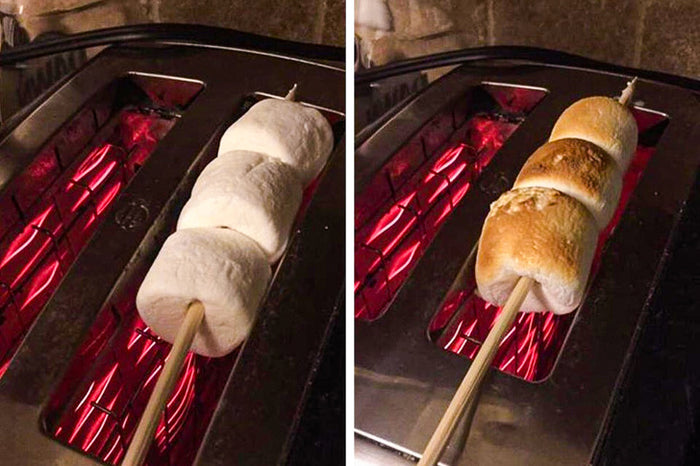
4. Cook your marshmallows over a toaster.

20 Food Hacks We’ve Tried and Loved

20 Food Hacks We’ve Tried and Loved

6. Use a colander to prepare the remaining bits of cereal from a box/bag.

20 Food Hacks We’ve Tried and Loved

20 Food Hacks We’ve Tried and Loved

 Many blender attachments will fit on mason jars.

8. If you don’t have a cookie rack, you can use skewers instead.

9. Try a pizza cutter if you need to mince ingredients for scrambled eggs.

10. Keep the bands on the asparagus in place so they don’t roll all over the place while you cut the ends off.

11. Keep flies out of your wine while sitting outside.

20 Food Hacks We’ve Tried and Loved

12. Bake 2 pizzas at once in 1 pizza-sized oven.

13. If you have a pack of bagels, use the hole in the bagel to stuff the open end of the packaging in. This way, they stay fresh!

20 Food Hacks We’ve Tried and Loved

 14. A hairdryer will help you to remove excess moisture from a chicken to make it super crispy.


source: brightside

Pool Noodle Hockey for Kids

During the Summer Olympics there are mens and womens field hockey teams. They play with a stick that has a shepherd's crook on it and hit a small ball.  

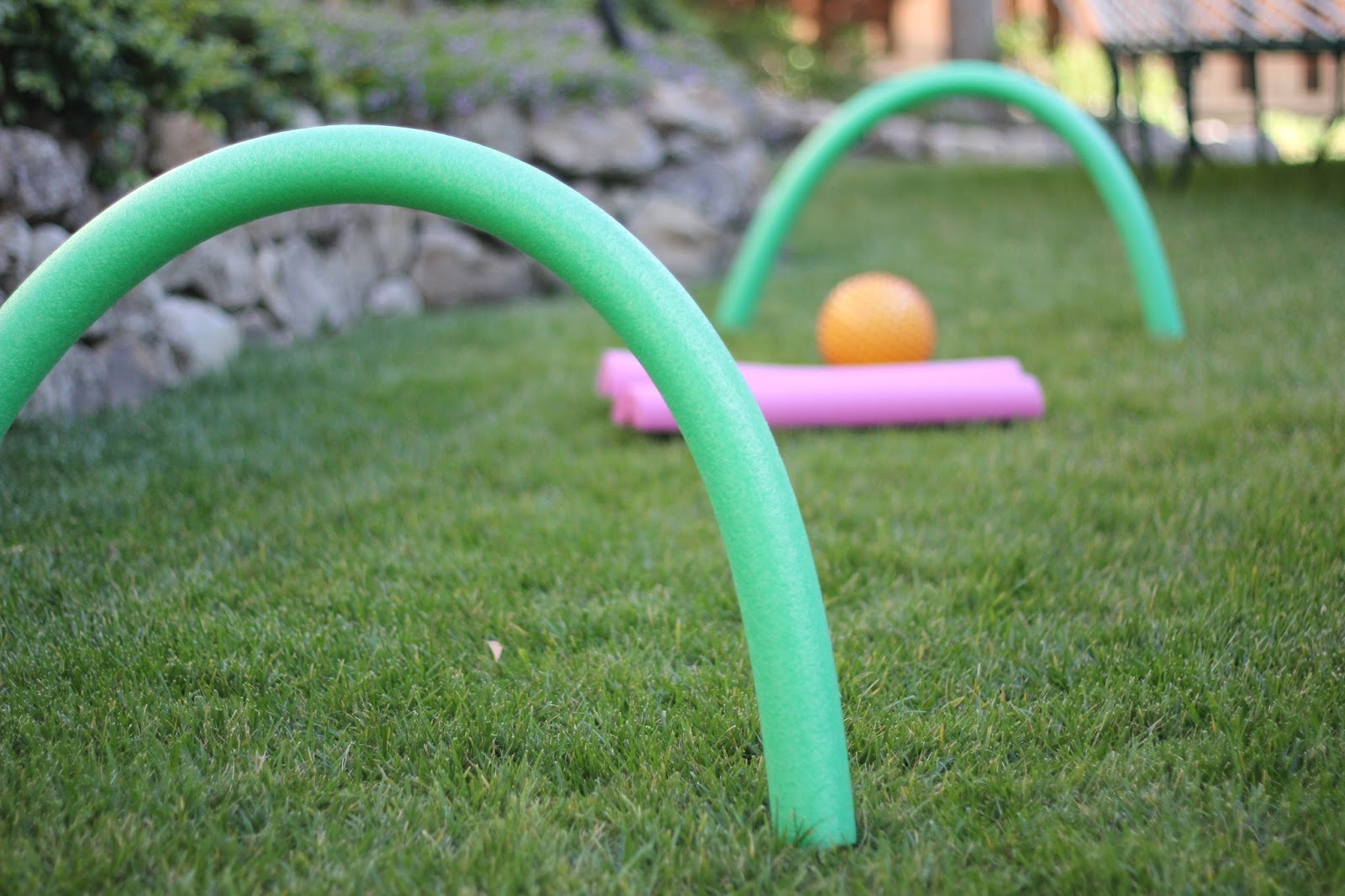
For our pool noodle hockey game I created goals and sticks using pool noodles. Scroll down for more details.

MATERIALS NEEDED FOR POOL NOODLE HOCKEY:

  • fat pool noodle
  • knife
  • two thin long pool noodles
  • large ball
  • 4 lawn stakes

HOW TO SET UP FOR POOL NOODLE HOCKEY:

Set up is super easy! Start by putting two yard stakes in the ground about 2ft away from one another. Put them in the ground deep enough to stay but leave them high enough out of the ground that several inches are visible.
Arch one pool noodle from one yard stake to the other and slip the yard stakes into the centers of the pool noodle ends. The pool noodle should make an arch and stay pretty secure, unless it is super windy. Repeat with another pool noodle maybe 10-15 ft away (depending on how large of a field you want).
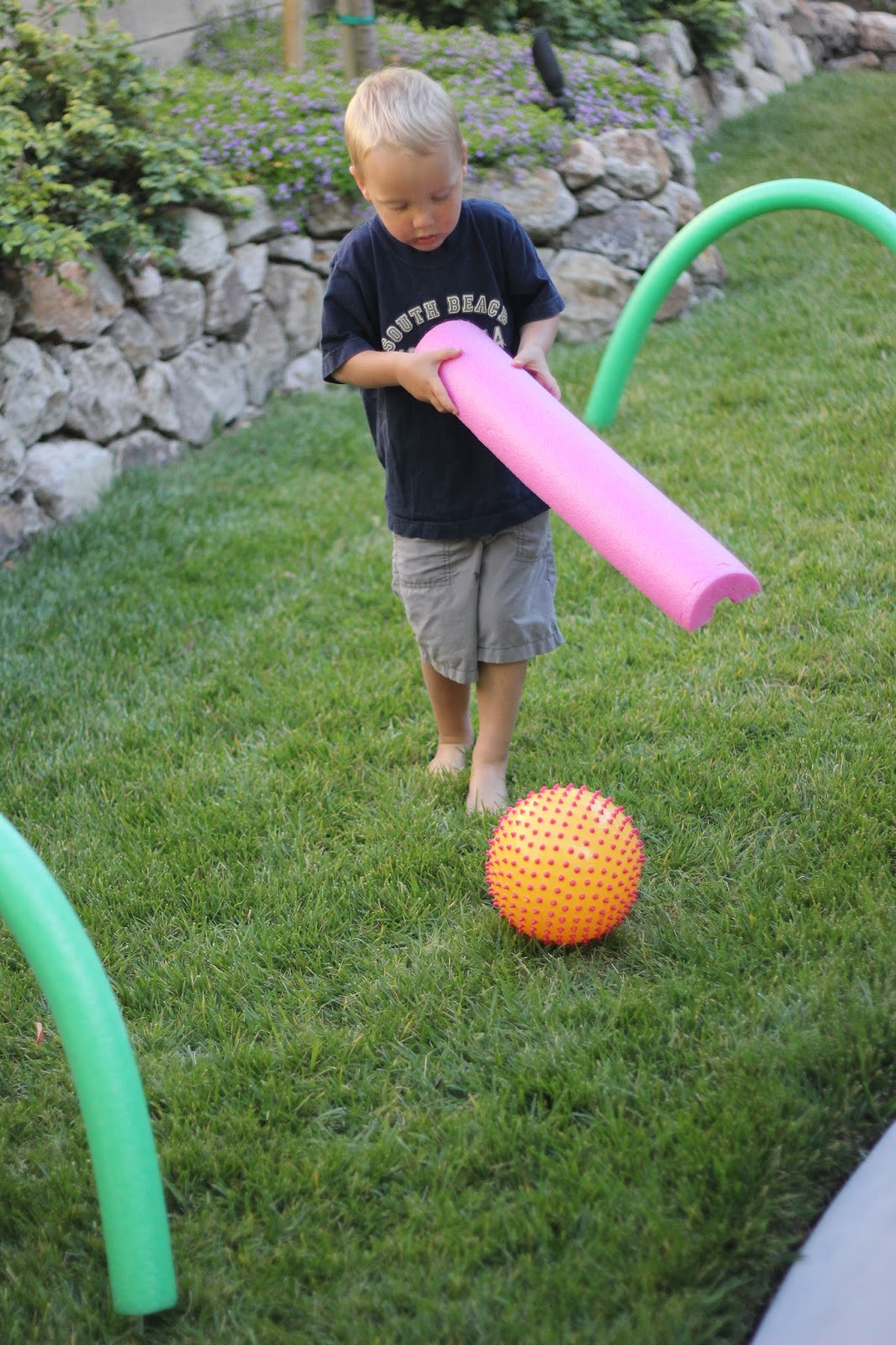
Next, cut the fat pool noodle in half lengthwise. The cut side of the pool noodle is a bit easier to hold on to and it is easier to hit balls with the fat pool noodle pieces. 
Now you are ready to play!

HOW TO PLAY POOL NOODLE HOCKEY:

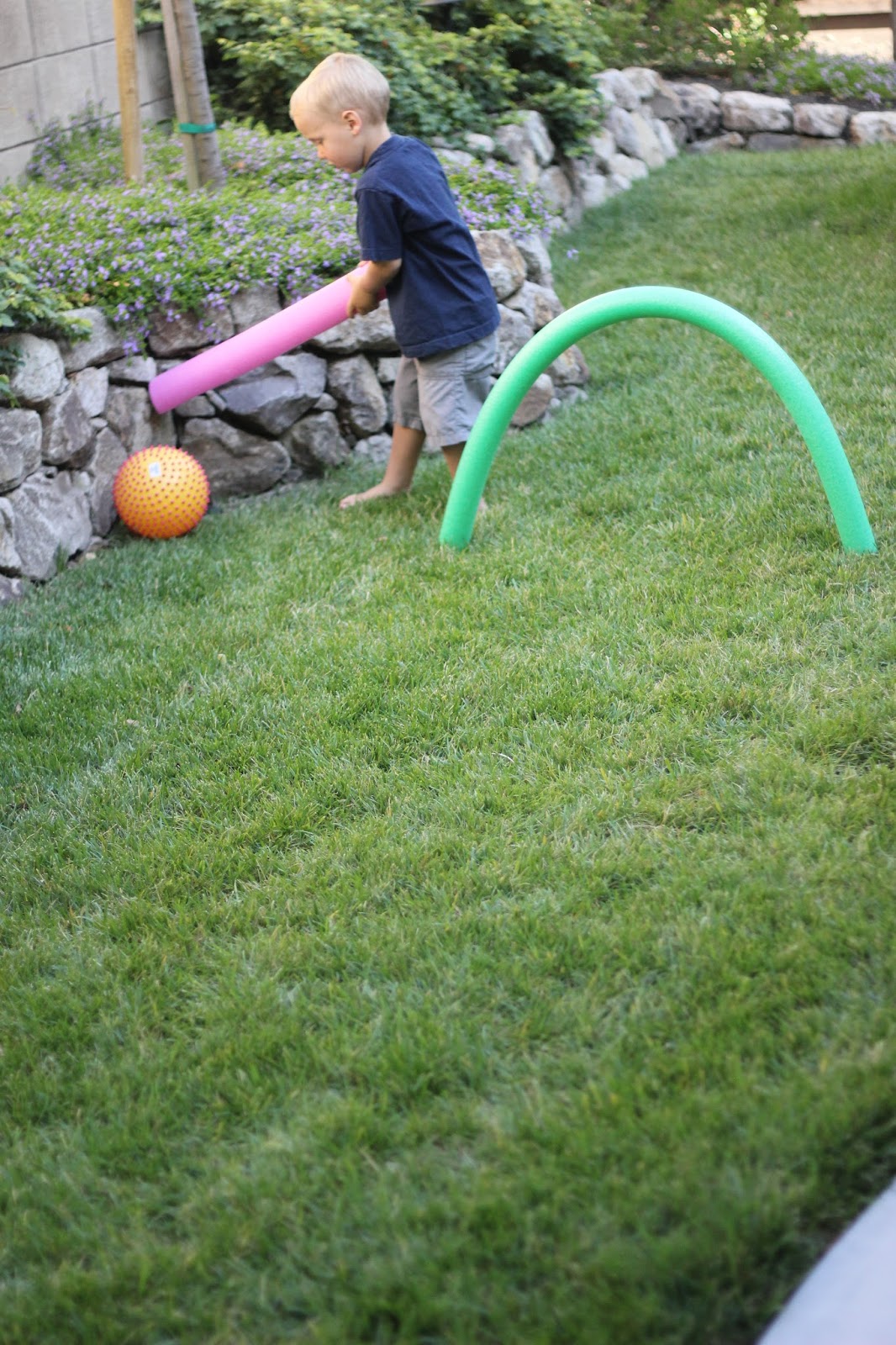
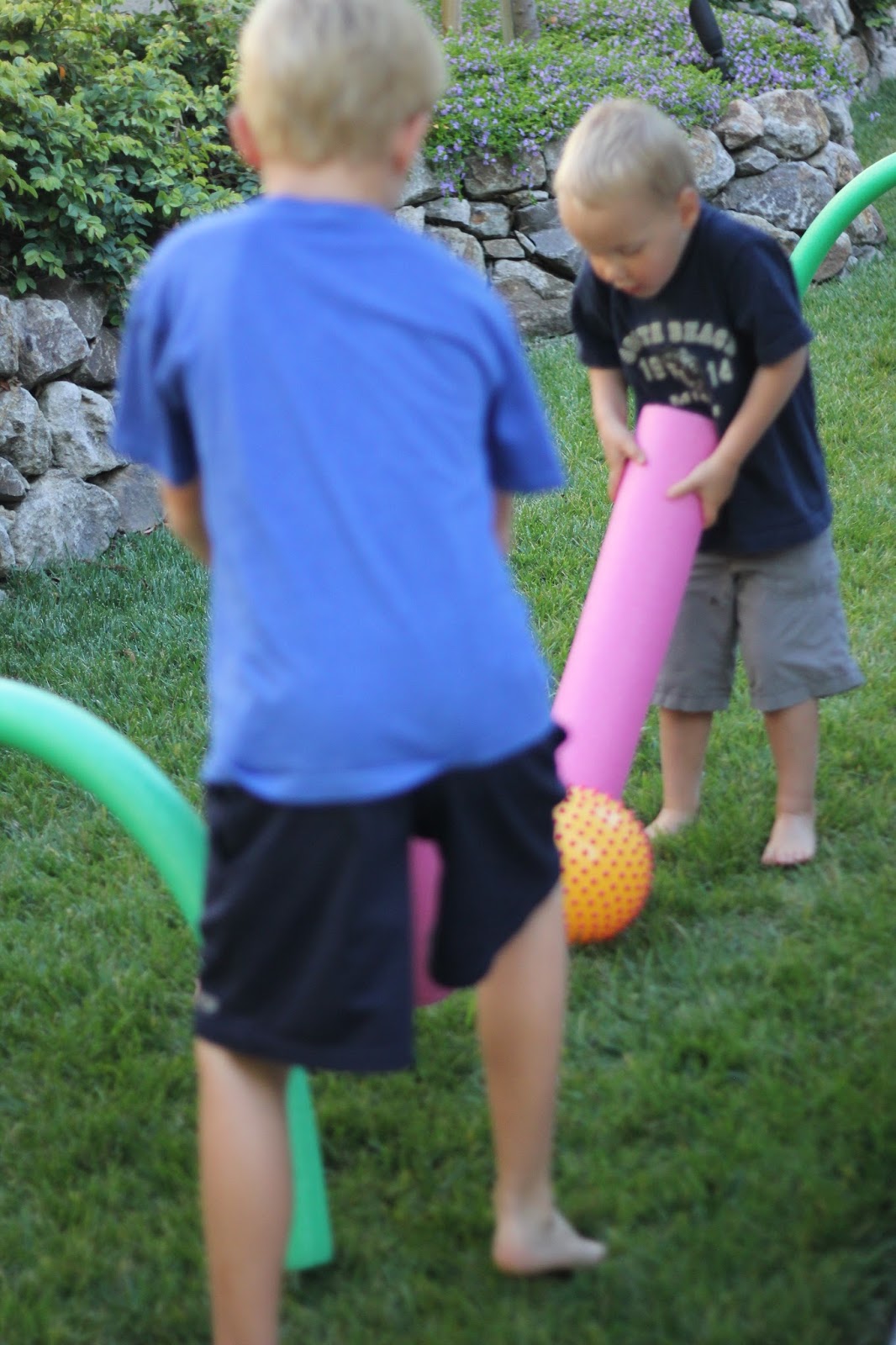
We made small teams of one and worked hard to get the ball in the other goal before it was stolen! Using the pool noodle half we hit the large ball again and again. My son was so proud of himself once he figured out how to "dribble" the ball up the field using his pool noodle. 

It is fun to get the entire body into pool noodle hockey, which was why we set some ground rules to begin with. We encouraged kids to keep their sticks on the ground or close to it when they were hitting the ball (no high sticking) and to keep their bodies to themselves (no fouls)!

This activity is great for working on hand-eye coordination, aiming, swinging, and working together.

source: toddlerapproved