
Home / Articles

Blog - Articles

Teach the Gift of Tidying Up this Holiday Season
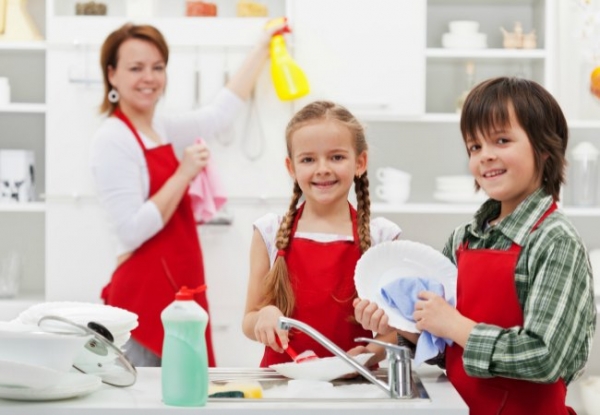
When it comes to kids and cleaning, the old adage, “Give a man a fish, and you feed him for a day. Teach a man to fish, and you feed him for a lifetime,” certainly applies. If we clean up after our kids, which is annoying but relatively easy, we have a tidy house for a day. But if we can teach our kids to clean, he’ll learn to have order for a lifetime. 

With the holiday train sure to unload more clutter, one of the best gifts just might be empowering your child to get organized. Research shows that people with tidier homes sleep better, are healthier, and have better focus. And as Marie Kondo cites as the motivation for her new children’s book, Kiki & Jax: The Life-Changing Magic of Friendship, “When children learn how to tidy, they realize what’s important to them.” Teaching your child to clean can be the gift that keeps on giving. Here are some helpful tips and ways to empower your child to tidy up.

  1. Assign a place for everything. As parents, we need to empower our children to clean. And they can’t really clean if they don’t know where things belong. So it’s important for parents to do the underlying work and create those bins and boxes. It may even help to create boxes within boxes. And if they are too young to read, you can even label the boxes with pictures. By assigning a place for their things and equipping them with the tools to clean, they’ll feel empowered to clean even when mom or dad isn’t around to provide instructions.
  2. Teach your child to be decisive. Mess is usually the result of indecisiveness. When we can’t decide where something goes, we tell ourselves we’ll clean it later, which begets mess. Instilling the habit of cleaning is actually a great habit that will teach your kids to be decisive. If your child isn’t quite sure whether his new transformer plushie belongs in the transformer box or the stuffed animal bin, ask him to be the one that makes that decision.
  3. Expunge the KonMari way. With holiday gifts sure to create more clutter, it’s important to part with things – and you don’t have to feel guilty about it. As Kondo says, the true purpose of a gift is to be received. So thank the giver, in continued Kondo parlance, then thank the gift, and part with whatever doesn’t bring you joy.
  4. Create boundaries. It’s unlikely that your child will be as tidy as your Martha Stewart ambitions might be. For many parents, designating a separate space for their kid’s things is a great way to keep harmony with their Tasmanian devils. Your child’s space will seldom be spotless. But it is their space. And as long as they understand that there are boundaries, that their things, their toys, their crayons, and their artwork, belong in the toy room or their room, you can claim the rest of your house in orderly fashion. Having their own domain will also help create a sense of ownership.
  5. Make choices for your child. When it comes to discarding things, you will likely need to make some choices on behalf of your child. Kids tend to be hoarders and they will likely say every piece of toy brings them joy if you ask them. It’s probably safe to assume that if your child hasn’t played with a toy in over a year, he won’t miss it very much.
  6. Teach your child to clean in increments. Telling a child to clean up his room can feel daunting. But telling a child to clean for the next five minutes is much more manageable. And this way, you would also be teaching your child to focus on the effort, not the result. In those five minutes, your child gets to decide what to keep, what to throw away, and learn organizational skills by putting things away in their proper place. He’ll create order. Don’t be surprised, when after seeing the fruits of his labor, he continues to clean even after those five minutes are up.
  7. Inspire through reading.  Books are a great way to initiate new perspectives. Kondo’s new book is certainly a great place to start. Kiki & Jax: The Life-Changing Magic of Friendship, is a simple read with a powerful message: too much clutter can get in the way of important things in life like friendship. 


source: creativechild

Teaching Children to Resolve Conflicts

In a perfect world, our children would all get along with one another. There’d be no sibling squabbles and no fighting amongst friends. Of course, we don’t live in a perfect world, and so peaceful conflict resolution is an important skill for children to learn. When left to work it out for themselves, few children actually do. In fact, without proper teaching, children are likely to fall into patterns of bully and victim and never learn how to work through the dispute constructively.

Emotional intelligence is a key part of conflict resolution because for a resolution to take place, children must be able to understand their own emotions and the emotions of others and to verbally express those feelings in an appropriate way. This doesn’t happen overnight. Although it takes time to develop these skills, each time we talk about feelings with our kids, we are helping the process along. Describe to your children how sadness, anger, happiness, and other emotions feel in the body. Talk about ways to move through the sadness, frustration, etc. so that your child will learn the lifelong benefit of emotions regulation. 

A second key to successful conflict resolution is learning how to communicate effectively. You can coach children through this process by playing the role of interpreter. The goal is to help children voice their feelings and needs and to help each child understand what the other person’s feelings and needs are as well. In her book, Peaceful Parent, Happy Siblings, Dr. Laura Markham says, “Successful interpretation requires us to use our empathy to understand the perspective of both children. It also requires us to stay calm, so we can resist leaping to judgment, even while we set limits to keep everyone safe.” If children cannot express what he wants with words, they will use actions such as hitting, pushing, biting, etc. That’s why emotional intelligence is so important. Once kids learn to identify and express their emotions, the need to act out diminishes and communication greatly improves. As Dr. Markham lays out, three things are happening while you are playing interpreter.

1. You’re describing what’s happening.

2. You’re empathizing with each child.

3. You’re coaching them to put their feelings into words without attacking the other person.

Here’s how that might look:

Six-year-old Jack is playing with his dinosaurs when his four-year-old brother, Sam, comes over and grabs the T-Rex from his hands.

Jack: Hey! Give it back Sam! I’m playing with that!

Sam: No! I want to play!

You: Hey, what’s the shouting about?

Jack: Sam took my T-Rex that I was playing with!!

You: So Jack was having a turn with the T-Rex and you wanted a turn? Can you tell him what you want?

Sam: I want a turn with the T-Rex!

Jack: It’s my turn!

You: I hear you. You both want a turn. What solution can we come up with?

Jack: I can give the Sam the T-Rex when my turn is over.

Sam: But I want it now!

You: Sam, I hear that you want the T-Rex now, but how would you feel if Jack grabbed it out of your hands before your turn was up?

Sam: Bad I guess. Fine, but I want a turn soon.

Jack: I’ll play with it until lunch, and then you can play with it.

Sam: Ok.

You: That sounds like a great solution! Well done!

 Of course, these situations don’t always go so smoothly, but we do the best we can at helping them come to a peaceful resolution. After a few practices, they’ll begin to do this on their own. I still remember the day I started to step in during a sibling dispute and my older son, “That’s okay, Mom. We can handle it.”

Magical.

Problem-solving is another important aspect of conflict resolution. When children are presented with problems like wanting the same object, they need to learn how to compromise. Rather than jump in and give them a solution, ask them to come up with the solutions. This builds their problem-solving muscles! You may need to nudge them along by asking questions like “what caused you to do that” or “how do you think that made her feel” or “what was the outcome of your decision?”  Tell them to look for win/win solutions or a compromise that everyone is happy with. Then, go through the solutions with them and ask if they all agree. Once an agreement is made, watch to make sure the kids follow through with their agreement.

Finally, children should be taught how to do repair work after conflict. Rather than forcing children to apologize, focus on coaching them through relationship repair. Ask “how can you make this better” or “what do you think your friend needs right now?” If your child is ready to give a heartfelt apology, that’s great. Other suggestions might be to help repair or rebuild something that was destroyed, draw a card, help the sibling with a chore, etc. When children are given the responsibility and the opportunity to repair the relationship, they learn that they can make things better and that they’re capable of fixing mistakes. If the child doesn’t want to do any repair work, they’re probably still harboring hurt feelings that need to be worked through. You might just say, “It sounds like you need a little more time. I know that you’ll do the right thing when you’re ready to make this better.”

Summary for Teaching Peaceful Conflict Resolution

1. Teach your child about emotions. Emotional intelligence is key not only to conflict resolution but to success throughout life. Empathize with your child’s emotions. Talk about feelings often. Discuss how others might be feeling. Play games that teach children about emotions and role-play scenarios to really help the lessons stick.

2. Teach positive, effective communication skills. One way to do this is through your role as interpreter. Walk the children through verbalizing their feelings and needs as well as listening to the feelings and needs of the other child.

3. Help the children be problem solvers by asking questions that help them come up with win/win solutions. Monitor to make sure they honor their agreement.

4. Coach the children to make things better through repairing the relationship. Empowering them to make things better helps them feel better, too.


source: creativechild

7 Montessori-inspired ways to have a smoother morning with your kids

When our children spend so much of the day away from us at school, the moments we do have together are precious. But, they don't always feel precious in the whirlwind of getting ready and out the door each day. Sometimes it seems like no matter how much time we allot, it is never enough. After all, who can predict that last week's favorite train shirt would lead to a full-on toddler meltdown during your morning routine for school?

Here are a few things you can do to help your child have an easier morning routine when going back to school:

1. Talk it through

Choose a low-stress time, such as while riding in the car or eating a snack together, and talk through the morning routine with your child. Ask them what needs to happen in the morning before they go to school. Prompt with tasks they might forget, like brushing teeth or putting on shoes. Walk through all of the steps a few times so they have a good idea of what is coming.

While your child will inevitably still need reminders, this will give them a solid understanding of what needs to happen each day.

2. Make a picture chart

After you've talked through everything, make a picture chart for your child depicting the sequence of their morning routine. Take a picture representing each step—one of the potty, one of their toothbrush, one of their clothes laid out, etc. Or, have fun drawing the pictures together instead!

A picture chart provides even young children a resource, other than you, to consult when they're unsure of what to do next.

It can also be helpful if your child gets off track. Remind them to check their picture chart to see what comes next. This is more empowering than simply telling them exactly what to do, which is more likely to instigate a power struggle.

If your child is older, help them write a list, or draw their own pictures of what needs to happen in the morning and post it somewhere they will see it each morning, like by the bedside table.

3. Have your child pack their own lunch

Depending on your schedule, it is likely better to do this the night before, but encouraging your child to pack their own lunch helps them take ownership of their school day.

Worried their lunch will consist of nothing but crackers and grapes? Make a simple rule such as one protein, one grain, one fruit, and one vegetable. Help them think of options in each category.

If they're older, brainstorm what they would like in each category before you go to the grocery store. Anything you can do to help them feel like they have a say in the process will help the morning go more smoothly.

4. Offer limited clothing choices

Allowing children to choose their own clothes is wonderful, but it can be quite time-consuming in the morning. Lay out two options for your young child to choose from. Always put them in the same place, such as a small shelf in their closet, so they will know where to look in the morning.

For an older child, encourage them to lay out their own clothes the night before so they won't have to decide when they're still half asleep in the morning.

5. Allow a natural consequence

When the planning and picture charts don't work, try allowing a natural consequence to take place instead of nagging and repeating yourself. It may be a little unpleasant, but it will also be effective, and will likely only need to happen once.

Are they taking too long to get out of bed? There will be no time for eating pancakes together, they'll have to settle for a granola bar in the car.

Are they refusing to get dressed? They will have to bring his clothes with him and arrive at school in jammies.

These are not punishments, they are simply things that logically happen when the routine isn't followed.

6. Build in time for togetherness

One reason that children stall in the morning is that they want you to help them because they need that time together. Build in a few minutes of togetherness before asking your child to get themself ready each morning.

It may seem like you don't have 5-10 minutes to spare, but this will likely save you time as your child will have gotten the bonding time they need and be less likely to resist the rest of the morning.

For an older child, encourage them to lay out their own clothes the night before so they won't have to decide when they're still half asleep in the morning.

5. Allow a natural consequence

When the planning and picture charts don't work, try allowing a natural consequence to take place instead of nagging and repeating yourself. It may be a little unpleasant, but it will also be effective, and will likely only need to happen once.

Are they taking too long to get out of bed? There will be no time for eating pancakes together, they'll have to settle for a granola bar in the car.

Are they refusing to get dressed? They will have to bring his clothes with him and arrive at school in jammies.

These are not punishments, they are simply things that logically happen when the routine isn't followed.

6. Build in time for togetherness

One reason that children stall in the morning is that they want you to help them because they need that time together. Build in a few minutes of togetherness before asking your child to get themself ready each morning.

It may seem like you don't have 5-10 minutes to spare, but this will likely save you time as your child will have gotten the bonding time they need and be less likely to resist the rest of the morning.


source: mother.ly